
Tide times and tidal currents, where you're going
The nearest tide station and the curve for the day, the next four highs and lows, and NOAA current stations with flood, ebb and slack. Then the same currents go into your route weather and your departure ranking.

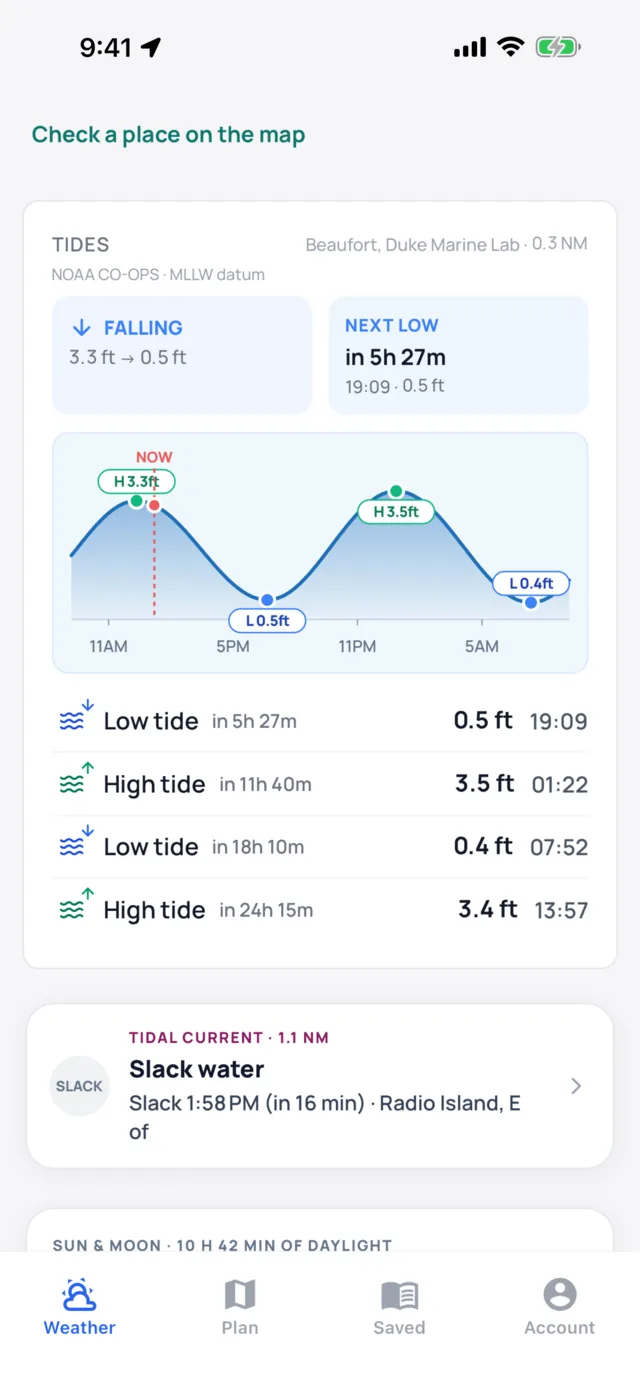
The tide for your harbour, at a glance
Sea Window finds the nearest tide station and tells you which way the water is going, how long until it turns, and the shape of the day. In US waters it reads NOAA CO-OPS stations. Everywhere else it draws the tide from a global tide model, so you have tide times on every coast you cruise.
- The stationName, distance away, source and the datum heights are measured from.
- Rising or fallingWhich way the tide is going, and between which heights.
- The next turnHow long until the next high or low, and when.
- The curveThe day's tide drawn as a curve, with a line at now and every high and low marked.
- The next fourHighs and lows with their heights and times.
| Turn | Time | Height |
|---|---|---|
| Low tide | 19:09 | 0.5 ft |
| High tide | 01:22 | 3.5 ft |
| Low tide | 07:52 | 0.4 ft |
| High tide | 13:57 | 3.4 ft |
The next four turns as the tides card shows them, with the station 0.3 nautical miles from the harbour.
Flood, ebb and slack from NOAA current stations
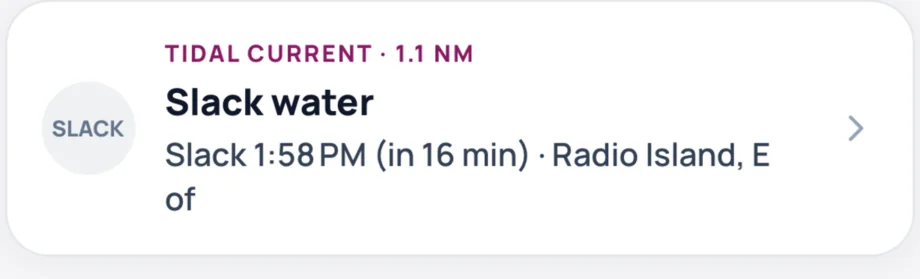
Tide height tells you how much water there is. The current tells you which way it is moving and how fast, and that is what decides an inlet, a bar or a headland. Sea Window shows the nearest NOAA tidal-current station with what the stream is doing now and when it next turns.
- NowFlooding, ebbing or slack at the nearest station, and how far away it is.
- Next slackThe time of the next slack water and how long until it comes.
- On the mapCurrent stations as markers, and NOAA bay and ocean model currents on the forecast slider.
The stream, timed to your passage
A tide table tells you about one place. Your trip passes several, at different hours. Sea Window carries the current along your route and into the decision about when to leave.
How the Departure Advisor uses currents- Departure AdvisorNOAA current predictions within 5 nautical miles of your route in US waters, ocean-model currents elsewhere. The strongest current and any wind against current count in the ranking, with the time named.
- Route weatherAt each waypoint, the current you'll meet: with you, against you or setting you across, with its speed.
- 7-day forecastHigh and low tide times in the same row as the wind and waves.
- BadgesEvery departure answer says whether tidal currents were included, on part of the route, or from the ocean model.
Tides and currents questions
Where do the tide times come from?
In US waters, from the nearest NOAA CO-OPS tide station. Everywhere else, from a global tide model, with highs and lows worked out from its sea level every 15 minutes. The tides card always shows the source.
Which datum are tide heights measured from?
NOAA stations use their own published datum, usually mean lower low water (MLLW). Model tides are measured from mean sea level. The datum is printed on the tides card next to the station.
Does Sea Window show slack water times?
Yes. The tidal current card shows the nearest NOAA current station, whether the stream is flooding, ebbing or slack, and the time of the next slack.
Is slack water the same as high or low tide?
Often not. In many inlets and channels the stream keeps running for an hour or more after high or low water. Use current predictions for slack, which is why Sea Window shows the current station alongside the tide.
Are tidal currents part of the departure ranking?
Yes. The Departure Advisor uses NOAA current predictions within 5 nautical miles of your route in US waters and ocean-model currents elsewhere, and counts both strong current and wind against current.
Does it have tides outside the US?
Yes. Tide times, heights and the curve come from a global tide model on every coast, so you have the next highs and lows wherever you cruise.
Guides on tides and currents
Tidal currents and slack water
Flood, ebb and slack, why slack is not high water, and how to read a current prediction.
Tides and currentsWind against tide: why the sea stands up
What an opposing current does to waves, and how to time an inlet or a headland around it.
Passage planningHow to plan a coastal passage
From route and timing to tidal gates, bolt holes and the final check before you leave.

Catch the tide, not the foul stream
Tide times, current stations and the stream along your route.